The culture of Cambrils /La cultura
Today we focused on culture in different ways. Therefore we asked our exchange partners for typical cultural aspects of Catalonia and here’s what they answered: The Ball de Bastons – A fascinating dance representing the Catalan culture.
As you can see on the picture, there are adults and children dancing together representing their amazing culture. They’re dancing a traditional dance called “Ball de Bastons”, Catalan for „stick dance“. It is a traditional and popular dance in Catalonia, Aragón, Valencia and Castilla y León. The dancers are often arranged in two opposite rows and they are carry one or two wooden sticks (typically made of holm oak) that they hit against each other to the rhythm of the music. Dancers often wear traditional clothes, including white shirts and trousers, a faldellín and bells on their calves. The dance is preformed on special and cultural occasions. Moreover this dance represents the culture and the traditions of the Catalan nation and also is findable to in the Cambrils culture.
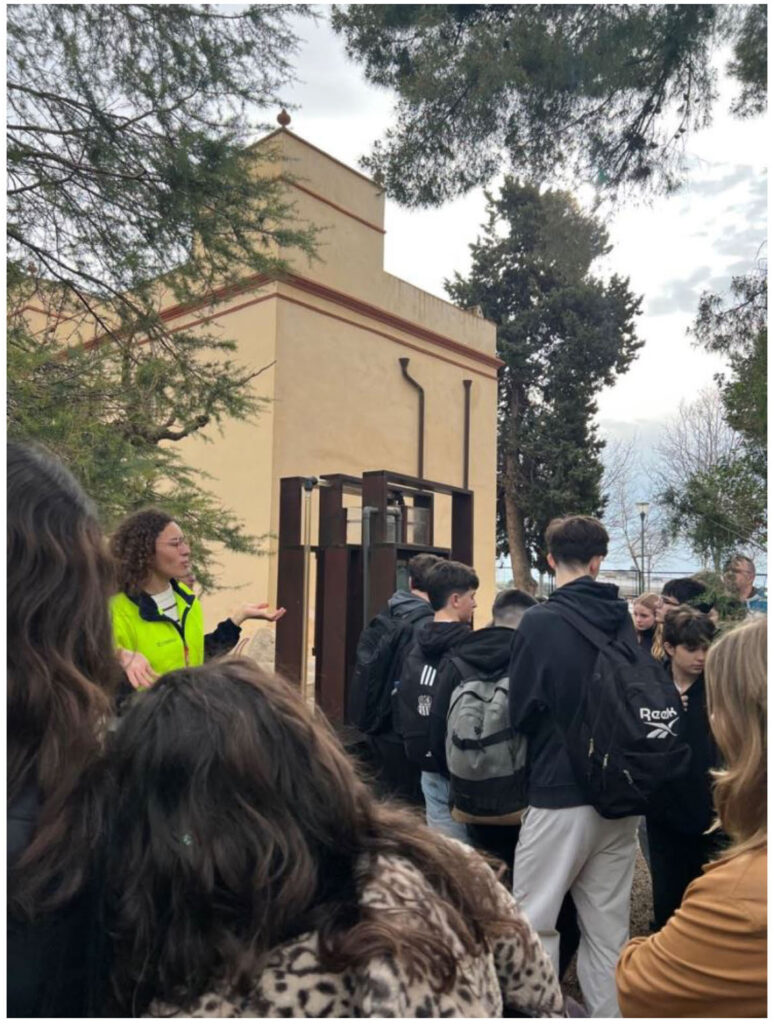
Also we learned about the importance of water in the past and today in two different museums of Cambrils. First we were tought about the use of water mills in the 18th century in the centre of Cambrils and compared it later with nowadays solutions where we saw many similarities.
Die Kultur Cambrils‘
Heute stand alles unter dem Thema der Kultur. Dazu befragten wir unsere Austauschpartmer nach typischen kulturellen Facetten Kataloniens. Hier ist ihre Antwort: Der Ball de Bastons – Ein faszinierender Tanz, der die katalanische Kultur repräsentiert.
Auf dem Bild sind Menschen verschiedener Altersgruppen zusehen, die ihre Kultur stolz mit einem Tanz repräsentieren. Sie tanzen den Traditionellen Tanz namens „Ball de Bastons”, katalanisch für Stab Tanz. Es ist ein Traditioneller Tanz in Catalonia, Aragon, Valencia und Castilla y León. Die Tänzerinnen und Tänzer stehen oft in zwei gegenüberliegenden Reihen und tragen ein oder zwei Holzstöcke, die sie im Rhythmus der Musik aneinanderschlagen. Sie tragen traditionelle Kleidung, darunter weiße Hemden und Hosen, einen Faldellín und Glöckchen an den Waden. Der Tanz wird zu besonderen kulturellen Anlässen aufgeführt. Er repräsentiert die Kultur und Traditionen Kataloniens und ist auch in der Kultur von Cambrils zu finden.
Darüber hinaus haben wir etwas über die Bedeutung der Nutzung von Wasser damals und heute gelernt. Dazu besuchten wir zwei verschiedene Museen in Cambrils. Zunächst besuchten wir eine Wassermühle, wo uns ihre wichtige Funktion im 18. Jahrhundert erklärt wurde. Danach wurde uns der heutige Wasserzyklus der Stadtwerke erklärt, wobei wir viele Gemeinsamkeiten feststellen konnten.
Mira & Helm